
Four agents, one crane, one shot
My son Mark is five and he is a little obsessed with tower cranes. He builds them out of blocks, he draws them, he points at them from the car.
So I gave four AI agents the same task: build him a tower crane construction site in the browser, in one shot. A crane that builds a house floor by floor, workers, supply trucks, day and night. One 20 KB prompt, one message, an empty folder, no help and no feedback while they worked.
Then I reviewed the four results blind, as A, B, C and D, with the key in a file I did not open. I was sure I knew which one was the best model. I was wrong about that, and the numbers afterwards were not what I expected either.
All four cranes are live on the site. You can open each scene, run the construction and look around before you read who built what.
The lineup
Two pairs, by class:
| Left | Right | |
|---|---|---|
| Frontier | Claude Opus 5.5, effort high | Gemini 4 Argon, high |
| Small and cheap | Claude Haiku 5.5, high | Qwen3.8-27B on Cerebras |
Each agent ran in its own native tool: Claude Code for the two Claude models, Antigravity CLI for Argon, pi for Qwen on the Cerebras API. Opus and Haiku on a Claude Max subscription, Argon on Google AI Pro, Qwen on $10 of prepaid Cerebras credit.
The prompt was the same file for all four. Three.js from a pinned CDN, everything procedural with no external models or textures, a control panel, a timeline from floor 0 to floor N, day and night, and a performance budget: under 300 draw calls per frame. No questions allowed. One pass. Stop when done.
The race ran on 2026-10-16. The prompt is published next to the scenes if you want to run it yourself.
What came back
Qwen said done after 4 minutes, on its second attempt. Argon after 28. Haiku after 52. Opus after 57.
Then I opened them one by one, with letters instead of names.
A: an empty page. A syntax error in the console and nothing on screen. The file had stopped in the middle of a function.
B: very strong. Detailed site, good light and materials, the crane lifts panels floor by floor, and the control panel actually works. I spent the longest here just looking around.
C: also strong. A bit less detail than B, slightly plainer materials, but clean and complete, and it ran well.
D: complete, with a tell. The whole site is there and it runs, but some of the workers hang in the air next to the building.
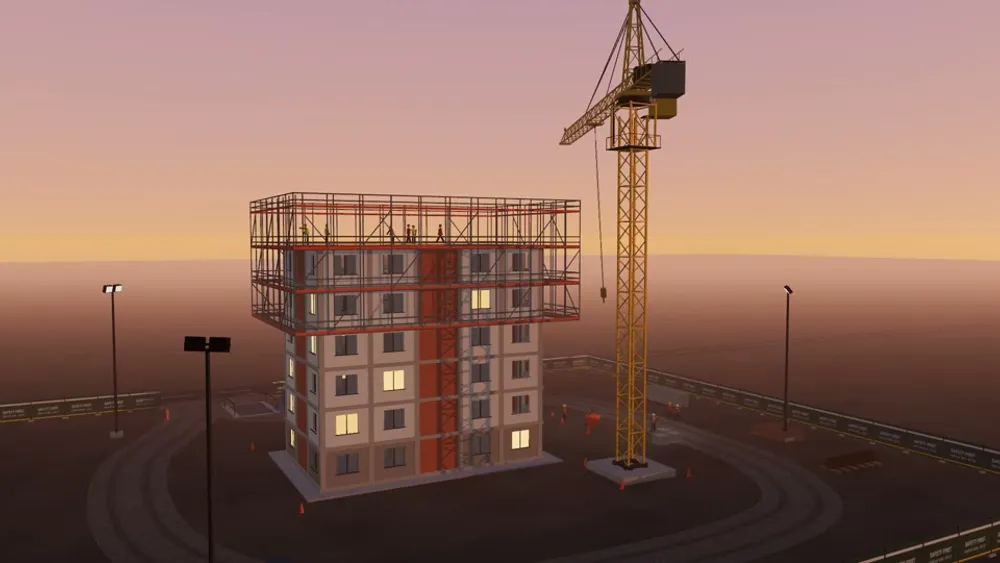
My guesses, written down before I looked at the key: A is Qwen, D is Haiku, B is the new Gemini Argon, C is Opus.
The key
A was Qwen. D was Haiku. Those two I got right.
B was Claude Opus 5.5. C was Gemini 4 Argon.
I had the frontier pair the wrong way round. I work with Opus every day and I did not recognize its output when the name was hidden. Two out of four.
The receipt
Numbers from the run logs, costs at API list prices checked on 2026-10-16:
| Letter | Agent | Time | Output tokens | Cost at API prices |
|---|---|---|---|---|
| B | Claude Opus 5.5 | 57.1 min | 308K | ≈ $13.84 |
| C | Gemini 4 Argon | 28.0 min | 102K | ≈ $1.71 |
| D | Claude Haiku 5.5 | 52.3 min | 439K | ≈ $2.13 |
| A | Qwen3.8-27B on Cerebras | 3.8 min + ~11 min of repairs | 159K plus repairs | ≈ $11, the prepaid $10 ran out |
The crane I liked most cost about 8 times more than the second one and took twice as long. Argon's $1.71 is its launch price, valid until the end of November; after that the same run is around $3.4.
One number surprised me on the Opus side: the same tokens on Opus 5 would have cost about $22.49. The cheaper cache reads on 5.5, $0.20 per million against $0.50, take 38% off the bill for this kind of long single-session build.
What happened to A
Qwen is the one worth describing properly, because the failure is specific and not about the model being bad at Three.js.
Its first run hit the output length limit and stopped mid-file at line 987. I sent back a bug report with no hints. It found the cause correctly, then hit the same limit again and wrote nothing. The second attempt worked after I told it to write the file in parts and lowered the reasoning effort to medium. That one is not a clean one-shot and I am counting it as assisted.
After three repair rounds the scene runs: site, crane, trucks, workers. The house still does not grow when you scrub the timeline, the night lighting is blown out, and it issues 78,125 draw calls per frame where the prompt asked for under 300. Then the $10 of Cerebras credit was gone and I stopped.
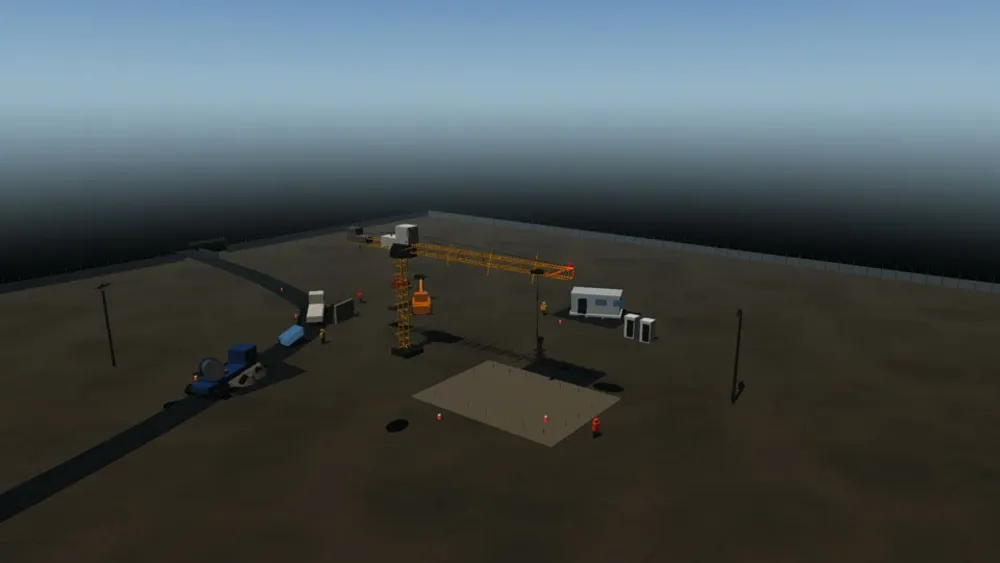
A 20 KB spec that has to come back as a single 4,000 line file is a bad fit for a small model behind a short output limit and a 131K context. The model reasons about the task fine. It cannot deliver the artifact in one piece.
How I pick now
Client work that has to be right the first time goes to Opus. The price difference stops mattering when a rebuild costs a day.
Drafts, experiments and anything I will iterate on anyway go to Argon. Half the time, an eighth of the cost, and the result was close enough that I picked it over Opus when the names were hidden.
Small models on fast hardware are good for short tasks with small outputs. Not for a one-shot build of this size.
And the part I keep thinking about: with the labels off, I could not tell my daily model from a competitor. If you are choosing between frontier models by reputation, run your own task through both and look at the results before you look at the names.
Mark picked B as his favorite, for the record. He got that one right without reading any of the numbers.
Open all four cranes and the prompt · the full race on YouTube